What a curious film is A Quiet Place: Day One: a production belonging to an already established franchise in cinema and, therefore, already has some defined characteristics. However, this one offers different elements from the expected and also aspects that we do not often see in apocalyptic subgenre films.
As the name itself suggests, this is a prequel: it takes place before the two previously released A Quiet Place films and shows the beginning of the alien invasion by creatures that cannot see but hunt humans by sound. The only way to avoid them and consequently a sudden and violent death is to stay very quiet.
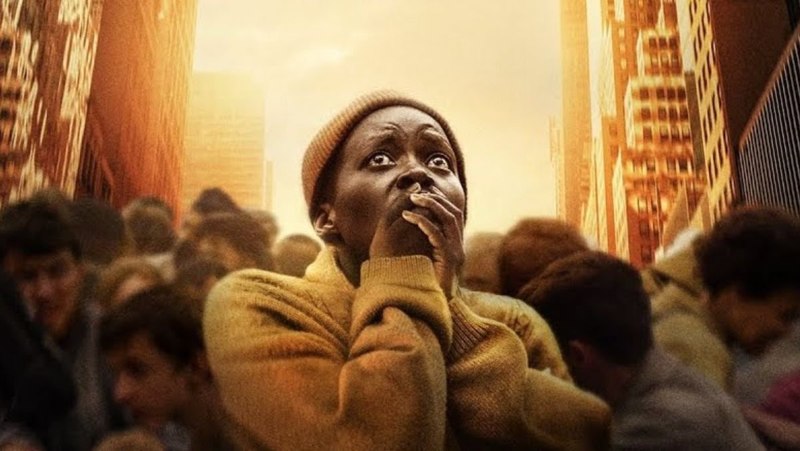
But within this familiar structure—and a plot that we more or less already know where it’s going since we’ve seen the previous films—director and screenwriter Michael Sarnoski inserts some unusual elements. To begin with, the heroine Sam (played by Lupita Nyong’o) is already dying at the start of the story—she is undergoing cancer treatment. One day, Sam goes to New York with other patients and staff from the hospital where she is being treated, and the world turns into hell. Fighter jets begin to bombard the city, and terrible monsters fall from the sky and start killing anyone who makes any noise.
MELANCHOLIC DRAMA INSTEAD OF TERROR
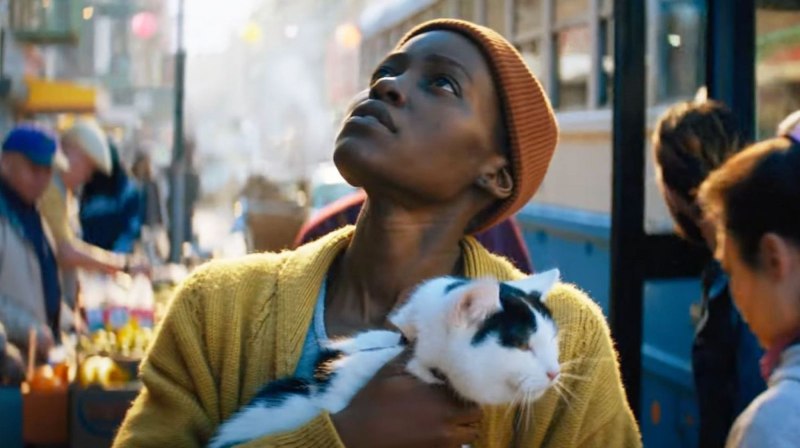
Amidst this scenario, human characters come and go from the story without much ceremony. The most significant is Eric, played by Joseph Quinn, from the series Stranger Things. Since she is living on borrowed time, the heroine makes some decisions throughout the story that may alienate some viewers. Action and suspense scenes with the monsters seem to be there just to tick the boxes because the film is part of a known franchise, and this kind of thing is expected. The creatures are uninteresting, and when the film tries to explore them a bit, the result is underdeveloped. And there is a kitten that ends up being a more important character than most of the humans that appear.
Sarnoski is responsible for this different touch: the director of the curious and interesting Pig (2021) inherits the franchise from its original director, John Krasinski, who returns here only as a producer and story creator. And Sarnoski makes a franchise film that follows its own path. Indeed, at several moments, this Day One feels more like a melancholic drama than a horror or suspense film and is more interested in examining the behavior of some humans in an extreme and strange situation than in its action scenes.
Not that they don’t exist and the ones we have are adequate: there is a chase through a flooded subway tunnel, and the climax rewards the viewer’s investment in the characters. But they are strangely lacking in tension. It’s as if we were watching a genre film with its traditional plot elements, but the story is small and there isn’t much to tell.
DILEMMAS AMIDST THE APOCALYPSE
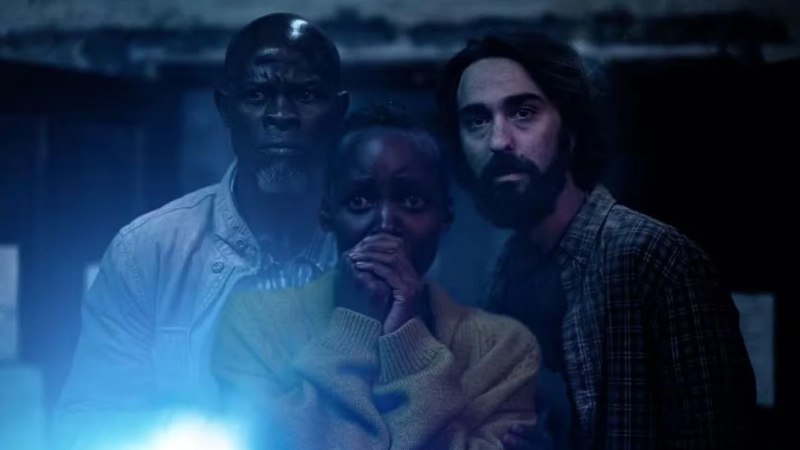
Sarnoski’s real interest lies in his two main actors: Lupita, of course, is one of those performers who can evoke numerous emotions just with her face, and she carries the film admirably, making everything seem easy. And Quinn is not far behind; he is also very expressive—his wide-eyed looks match Lupita’s—and he creates a sensitive portrait of a guy with no direction who rediscovers his strength.
And as an aside, we can’t help but mention the cat: Sarnoski and the story pay so much attention to the feline that it ends up having one of the best feline performances in cinema history.
The director also wants to explore the nuances of the story. Well, if you are already dying, is it worth fighting for life? Is it possible to find ways to value life if everything is collapsing around you? These are questions that A Quiet Place: Day One evokes in the viewer and finds echoes in Sam’s sensitive journey throughout the film. Of course, nothing is very deep, but this approach is refreshing, different, and gives a bit more ambition than what we usually see in the current average.
VERDICT DEPENDS ON THE VIEWER
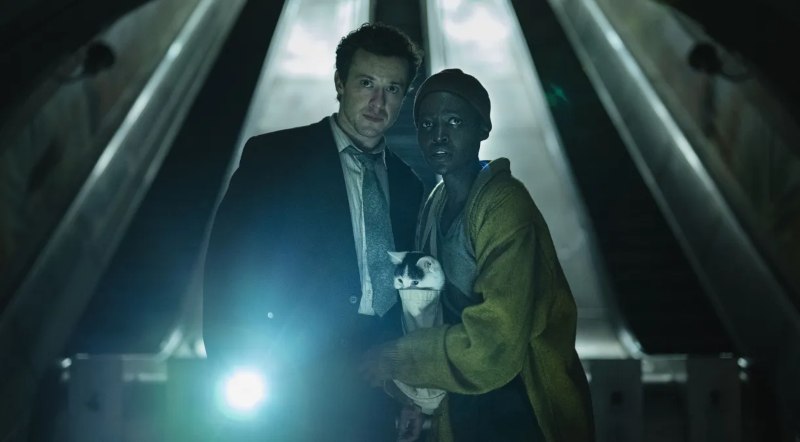
How much will a viewer like A Quiet Place: Day One? It depends on personal taste. Personally, I think some viewers will be frustrated by the lack of tension or the expectation that the name A Quiet Place creates. Others might enjoy it precisely for the unique and sensitive experience and the more personal elements that the filmmakers bring here. I belong to the latter camp.
In my opinion, the fantastic original A Quiet Place from 2018 didn’t even need a sequel or prequel, and in a perfect world, they wouldn’t exist. But since they do, it’s good that it’s still possible to see some projects like this, strange and different enough even within such familiar structures. This Day One is not a great film, but it is interesting, and in this era of highly industrialized, impersonal, and algorithm-driven cinema, we learn to count our blessings where they appear.